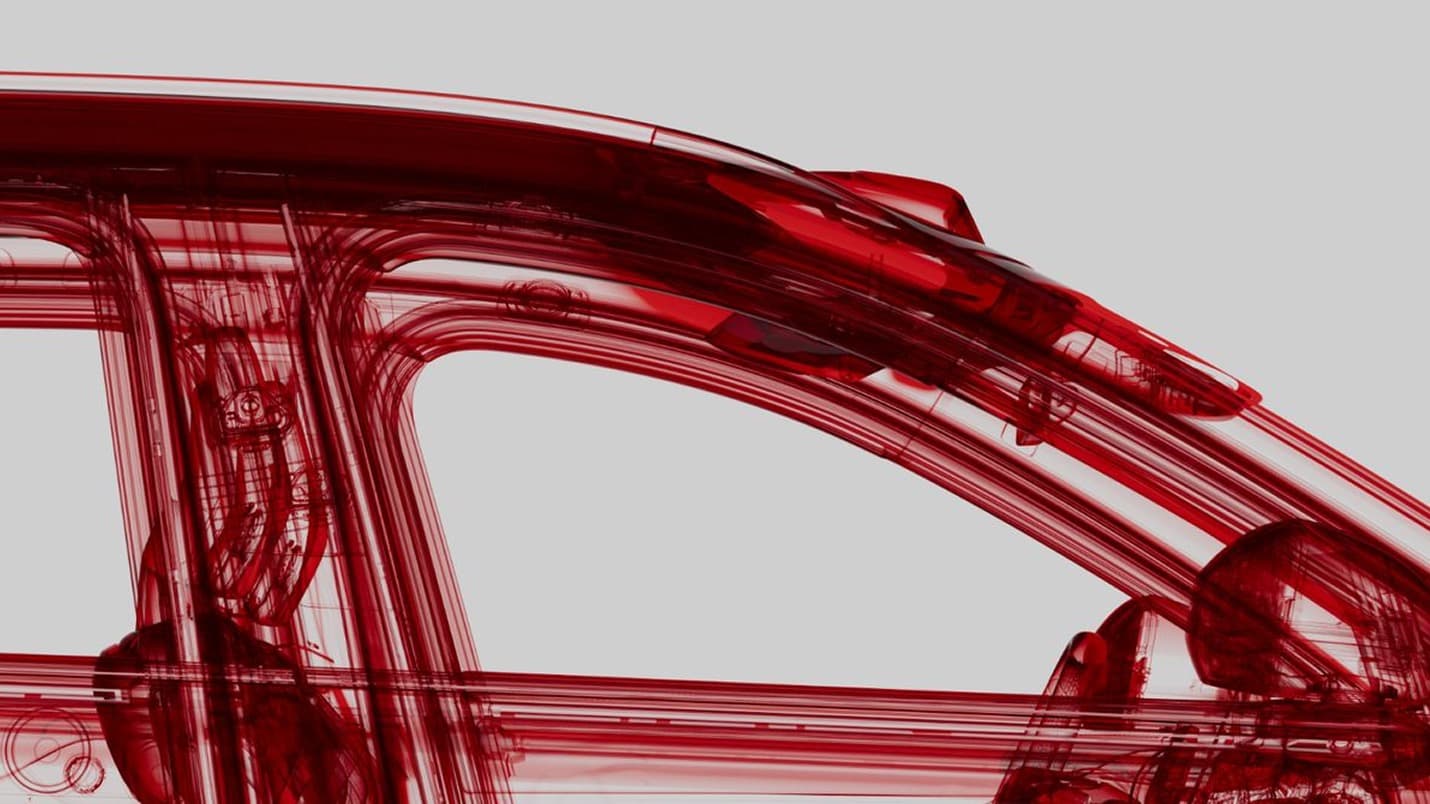


The world's first AI model that understands repair
DamagePartsProcedureLaborThe world's first AI model that understands repair
SupplyFaultInspectionAssemblyBuilt by AI researchers
and automotive veterans





1M+
car models
1B+
parts.
Proprietary model
Built from 5 years of original research, millions of vehicles and billions of parts.
Model card
Information
- Description
- Interpreter is Partly's general-purpose language model for the automotive repair industry.
- Inputs
- Text, photo, video, and voice.
- Outputs
- Text tokens.
- Architecture
- A multimodal model trained to reason over automotive parts data and repair workflows.
Data
- Training dataset
- Extensive proprietary research conducted in-house, combined with licensed data and reinforcement learning on historical repair data.
- Annotation
- Annotated by experienced parts interpreters using purpose-built in-house tools.
Evaluation
- Approach
- Parts-list accuracy on held-out production repair jobs, scored as an estimator working with each tool, against a current-tools baseline and frontier models.
- Results
- An estimator with Interpreter reaches 98.8% parts-list accuracy, against 92.1% with current tools. Frontier models score in the single digits on their own.
Usage and limitations
- Intended use
- General-purpose assistance for parts identification, repair guidance, and repair workflows across collision, mechanical, and dismantling.
- Out of scope
- Vehicles beyond passenger and light commercial; markets outside North America, EU, AU, and NZ.
Model capabilities

Comprehension
Reads a repair job the way an estimator does, including trade shorthand, jargon, and voice notes.

Resolution
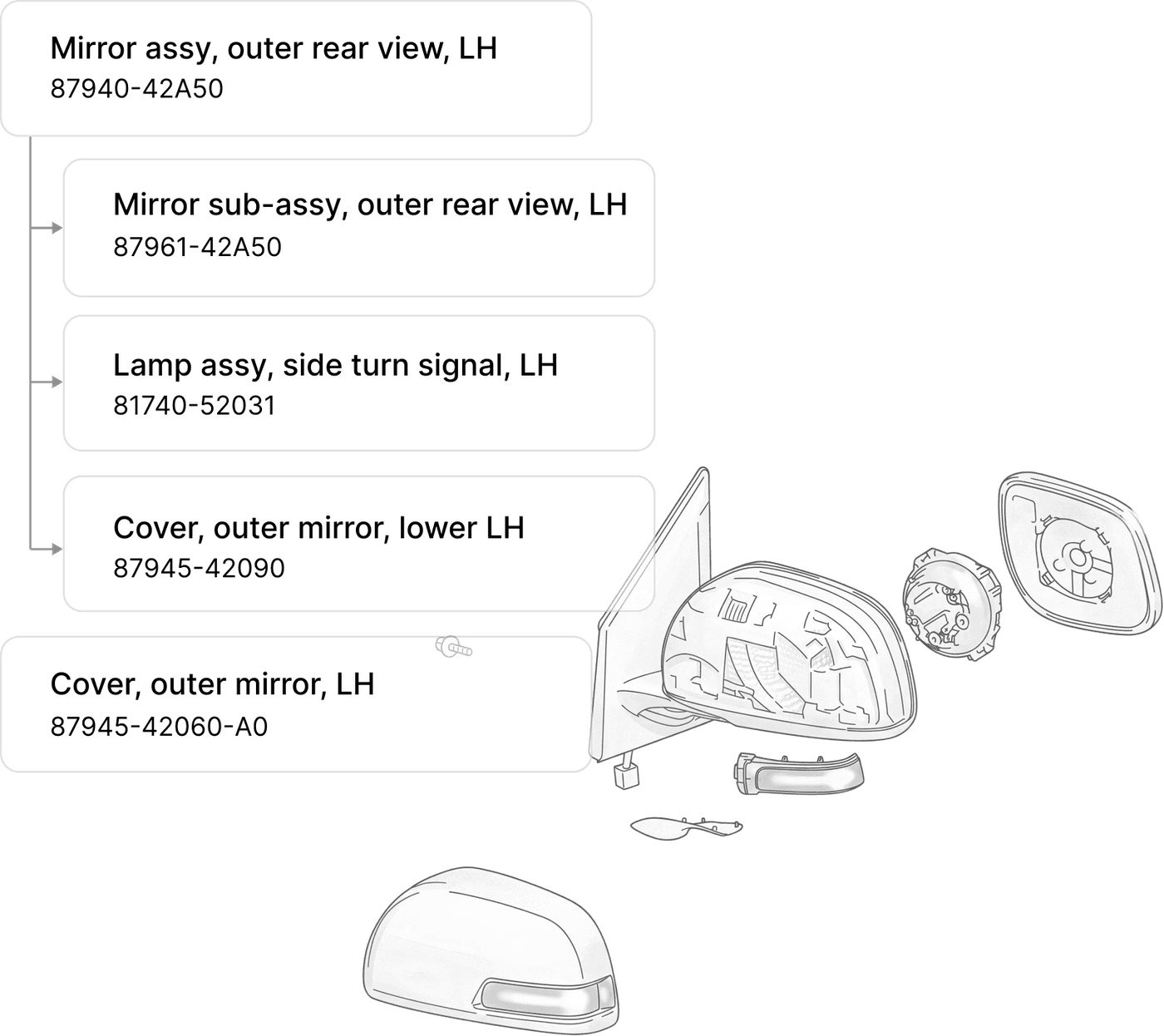
Reasons over complex relationships to resolve a job into the exact, purchasable part.

Auditability
Shows the reasoning behind every part it recommends, with confidence scoring.
Worked Examples
We've taken a few real-world scenarios to show how Interpreter resolves complex repair jobs.
Research